Electric Hot Water Systems
Electric storage is the most common hot water system in Logan homes — and the one we’re called to most. Repairs, servicing, replacement and installation.
How an electric storage system works
An electric hot water system is, at heart, an insulated tank with one or two heating elements inside it. A thermostat switches the element on when the stored water drops below the set temperature and off again when it gets there. A relief valve protects the tank from over-pressure, and a sacrificial anode inside the tank corrodes slowly so the steel tank doesn’t.
That simplicity is why electric systems last as long as they do, and it’s also why so many electric faults come down to a handful of replaceable parts.
Where electric systems usually fail
The classic one is no hot water at all: an element has failed, or the thermostat has cut out. Both are components, and on a tank in good condition both are ordinarily a repair, not a reason to replace the system.
The one that isn’t a repair is a tank that has corroded through. Once the cylinder itself is leaking, there’s nothing to fix — the system needs replacing. Rusty-looking hot water, or water appearing from the body of the unit instead of a valve or fitting, is often the first sign.
The other frequent call is a system on a controlled-load tariff that seems to run out too early in the day. Sometimes that’s a genuine fault; sometimes it’s a system that’s simply undersized for how the household now uses hot water. Worth knowing which before spending anything.
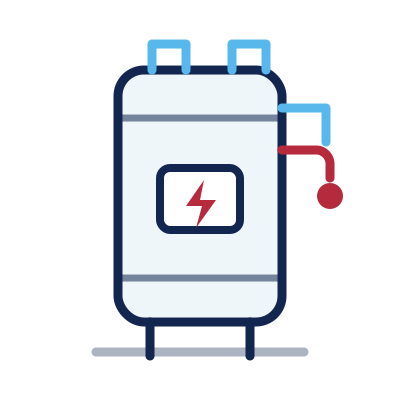
Electric hot water repairs, servicing and replacement
Element and thermostat replacement
The two most common electric hot water repairs, and usually the answer when there’s no hot water at all on an otherwise sound tank.
Relief valve issues
A temperature and pressure relief valve that’s weeping or discharging constantly — sometimes the valve, sometimes a sign of something else.
Anode and tank condition
Checking the condition of the tank and its sacrificial anode, which is what determines how much life the system has left.
Replacement and upgrade
When the tank is done, supply and installation of a new system — electric again, or a different type if that suits the household better.
What usually goes wrong
These are the symptoms we hear about most often. A good starting point for the call.
- No hot water at all
- Hot water lukewarm only
- Runs out much sooner than it used to
- Water trickling or pouring from the relief valve
- Safety switch trips when it heats
- Rusty or discoloured hot water
- Rumbling or kettling sounds from the tank
- Visible water around the base of the unit
Please don’t troubleshoot it yourself. Hot water systems combine electricity, gas, stored pressure and water hot enough to scald. If something looks, smells or sounds wrong, turn it off if it’s safe to do so and call (07) 3801 2155.
Usually a repair
- Failed heating element
- Faulty or drifting thermostat
- Relief valve replacement
- Isolation valve or fitting leaks
- Tempering valve giving inconsistent temperature
Usually a replacement
- The cylinder itself is leaking
- Persistent rusty water from a very old tank
- Parts no longer available for the model
- Repair cost approaching the value of a new unit
Which list your system is on comes down to having it looked at.
Common questions
How long does an electric hot water system last?
My electric hot water keeps tripping the safety switch. What is it?
Can you replace just the element?
Should I replace my electric system with a heat pump?
Related services
Electric system playing up?
Tell us what it’s doing and we’ll work out whether it’s a component or the tank.
Prefer to text or call a mobile? 0400 703 001