Heat Pump Hot Water Systems
Heat pumps are the newest type of hot water system in most Logan homes. Here is how they actually work, what tends to go wrong, and what Advance Hotwater can do with them.
What a heat pump hot water system actually is
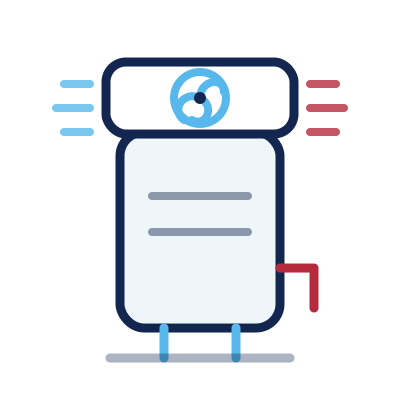
A heat pump hot water system heats water using the warmth that’s already in the surrounding air. A fan draws air across a coil, a refrigeration cycle concentrates that warmth, and the heat is transferred into the water in the tank. Same basic principle as a fridge or an air conditioner, running in the useful direction.
The practical difference from a standard electric system is that a heat pump moves existing heat rather than generating all of it with an element, which is why it uses less electricity to heat the same water. How much less depends on the unit, the climate and how your household uses hot water.
What that means day to day
Heat pumps need airflow, so they sit outside or somewhere well ventilated, and they make some noise when running — a fan and a compressor. Placement matters more than it does with a conventional tank. They also work best heating over a longer period than in a sudden rush, which suits some households better than others.
Servicing, repairs and replacement
Because there’s a refrigeration circuit and a fan involved, a heat pump has more going on than an electric storage system. Advance Hotwater can assess a heat pump that isn’t performing, service one that’s, and handle replacement when a system reaches the end of its life. Some faults on some models sit with the manufacturer’s own service network, particularly where a unit is still under warranty — if that’s the case we’ll tell you and point you the right way.
Heat pump hot water servicing, repairs and replacement
Performance assessment
Working out whether a heat pump is underperforming or simply behaving the way heat pumps behave.
Fault diagnosis
Units not heating, cutting out, running constantly, or throwing a fault on the controller.
Servicing
Checking condition, airflow, valves and the water side of the system on a unit that’s still doing its job.
Replacement and changeover
Replacing a heat pump that has reached the end, or talking through moving to or from a heat pump from another system type.
What usually goes wrong
These are the symptoms we hear about most often. A good starting point for the call.
- No hot water or not hot enough
- Unit running constantly
- Fan or compressor noise that has changed
- Fault code or warning on the controller
- Ice or heavy condensation around the unit
- Electricity use higher than expected
- Water leaking around the tank or unit
- System not recovering between uses
Please don’t troubleshoot it yourself. Hot water systems combine electricity, gas, stored pressure and water hot enough to scald. If something looks, smells or sounds wrong, turn it off if it’s safe to do so and call (07) 3801 2155.
Thinking about switching to a heat pump?
A fair question, and it deserves a straight answer.
Where would it go?
Heat pumps need airflow and make some noise. The spot your current tank sits in isn’t always the right spot for a heat pump — that’s one of the first things to check.
How does your household use hot water?
Heat pumps generally suit steady, predictable use better than large unpredictable spikes. How many people, and when they shower, makes a real difference.
What is the existing system doing?
If your current unit has years left in it, the answer may well be to leave it alone for now.
Running costs vary by unit and by household. Talk to us about your place.
Common questions
Is a heat pump the same as a solar hot water system?
Are heat pumps noisy?
Do heat pumps work in Queensland?
Can you repair my heat pump?
Are there rebates for heat pump hot water?
Related services
Questions about heat pump hot water?
Ask us. We’ll give you a straight answer about whether it suits your place.
Prefer to text or call a mobile? 0400 703 001